Fake reviews: 7 signs you should not ignore
Five stars feel reassuring, but the average does not tell the whole story. Look for patterns, timing and concrete experiences.
By Bo KristensenPublished 4 min read
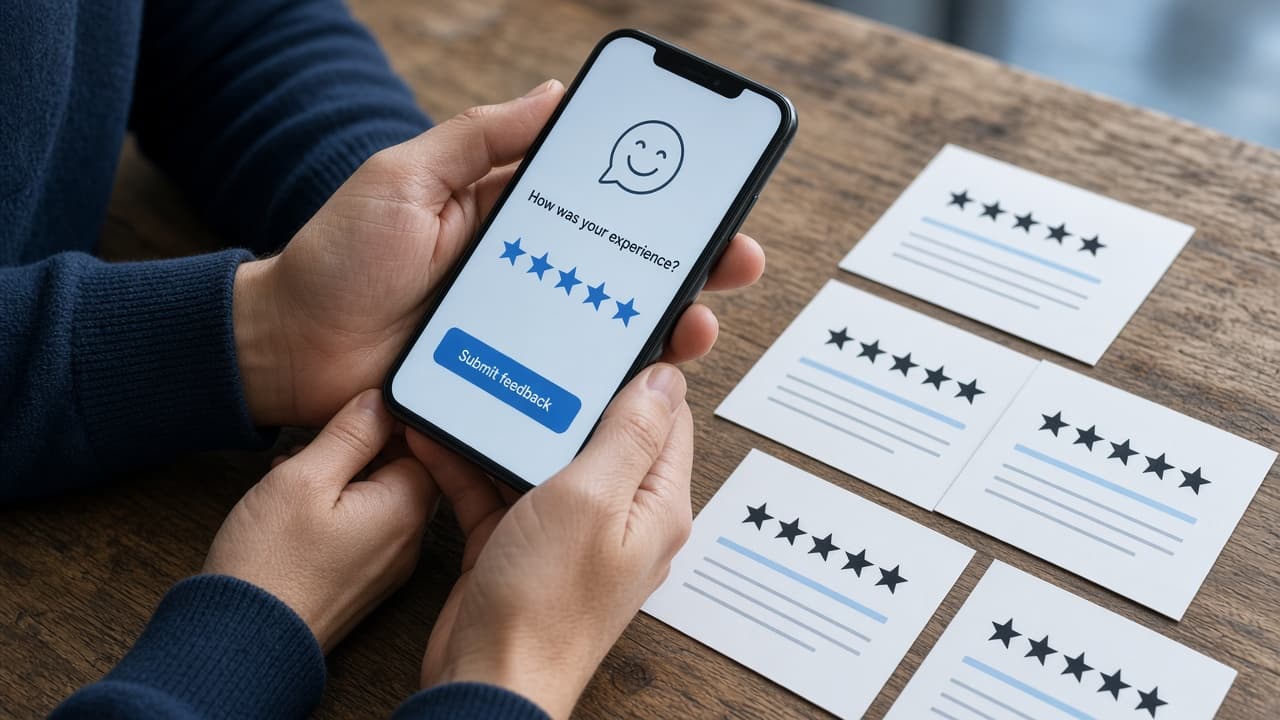
Five stars are not the same as five pieces of evidence
Reviews have become a normal part of how we shop. When two webshops sell the same item, many of us pick the one with the higher score. Serious shops know that — and so do scammers.
Fake reviews are no longer necessarily full of bad language and obvious exaggeration. They can be well written, produced with help from AI and paired with convincing profile photos. Looking only at the star count is rarely enough.
Here are seven signs you can use to judge reviews more critically.
1. The reviews are enthusiastic but vague
“Amazing product!”, “Best shop ever” and “Highly recommended” sound positive, but they tell you very little about an actual purchase.
Genuine reviews often include small, concrete details: which size the customer bought, how long delivery took, what the packaging looked like, or how customer service solved a specific problem. A short review can still be genuine, but if almost every text is generic, they are worth less as decision support.
2. Many reviews use the same phrases
Read five to ten reviews in a row. Do they repeat the same sentence structure, the same adjectives or the same slightly unusual wording?
A few similarities are natural. A whole run of reviews that sound like variations of the same advert can be mass-produced or written from a template.
3. The five-star reviews arrive in a clump
Look at the dates. If a shop had almost no reviews and then suddenly gets many top ratings in a few days, that is worth being curious about.
That is especially true if the wave comes right after several critical reviews. The pattern can have a natural explanation, such as a campaign with many orders, but it can also be an attempt to lift the average quickly.

4. The reviewers have no history
Click some of the profiles if the platform allows it. Have they reviewed several businesses and written about different kinds of experiences? Or has a large share of them written only one very positive review?
A person with one review is not automatically fake. We all write a first review at some point. But many almost empty profiles with similar texts is a pattern you should include in your assessment.
5. The picture looks completely different on other platforms
Compare several sources. A webshop can have glowing reviews on its own site, but a very different reputation on an independent review platform, in Google results, or in discussions on social media and forums.
Differences do not always mean manipulation. Customers use platforms differently, and some places attract mainly unhappy customers. Large gaps still deserve an explanation.
6. The review is about something other than the product
On marketplaces, product pages, item numbers or reviews can get mixed together. It can look as if a product has thousands of positive reviews, even though the texts are about other variants or completely different items.
Read a sample of the reviews and check whether they actually mention the product you are considering.
7. The shop only shows its own selected reviews
Reviews on the webshop’s own homepage can be genuine, but you do not always know how they were chosen, or whether critical reviews are published.
A logo from a review platform can also be inserted as an ordinary image. Click it and see whether you reach an active profile for exactly the company and domain you are visiting.
What about “verified purchase”?
The label is a positive signal, because it usually means the platform has tied the review to some form of transaction. Still, check how that platform defines and controls a verified purchase.
It is also not certain that the invited customers are a neutral sample. You should still read the content and look at the spread over time instead of trusting one label blindly.
Use the negative reviews in particular
The most useful reviews often sit between the extremes. Look for repeated problems: slow delivery, expensive returns, a different item than shown, no replies, or unexpected subscription charges.
Read the company’s replies too. A serious shop can get bad reviews, but a concrete, solution-focused answer often tells you more than a perfect average score.
Reviews are only one part of the picture
Even trustworthy reviews cannot confirm everything about a webshop. Combine them with information about the company, the domain’s history, payment, delivery and returns.
Shopeye therefore does not treat reviews as a final answer, but as one of several signals in the assessment of a webshop. If the reviews look fine but the company details do not add up, that mismatch should still be part of your decision.
Sources
Get a full check of the webshop with Shopeye
How it worksWhat we checkMarkdown
Related posts
How to check a webshop's CVR number
A CVR number that exists only shows that there is a company with that number. It does not show that it is the company you are about to buy from.
Scammed by a webshop? How to try to get your money back
Keep the evidence, write to the webshop and contact your bank quickly. Your options depend on the problem and how you paid.
What is dropshipping — and when should you be careful?
With dropshipping the webshop typically does not hold the item in its own warehouse. That can work well, but you should know where the item comes from and where it must be returned.