What is dropshipping — and when should you be careful?
With dropshipping the webshop typically does not hold the item in its own warehouse. That can work well, but you should know where the item comes from and where it must be returned.
By Bo KristensenPublished 4 min read
The webshop sells the item — someone else ships it
Dropshipping is a business model where the webshop does not keep the item in its own warehouse. When you order, the shop forwards the order to a supplier, who packs and sends the item directly to you.
That can be a perfectly legitimate way to run a webshop. The problem arises especially when the model is hidden, and the shop leads you to believe you are buying from a local warehouse or getting a special item, even though it is actually shipped from a cheap supplier far away.
You can end up paying a large mark-up for a standard product, waiting several weeks, or discovering that a return has to be sent abroad at your own expense.
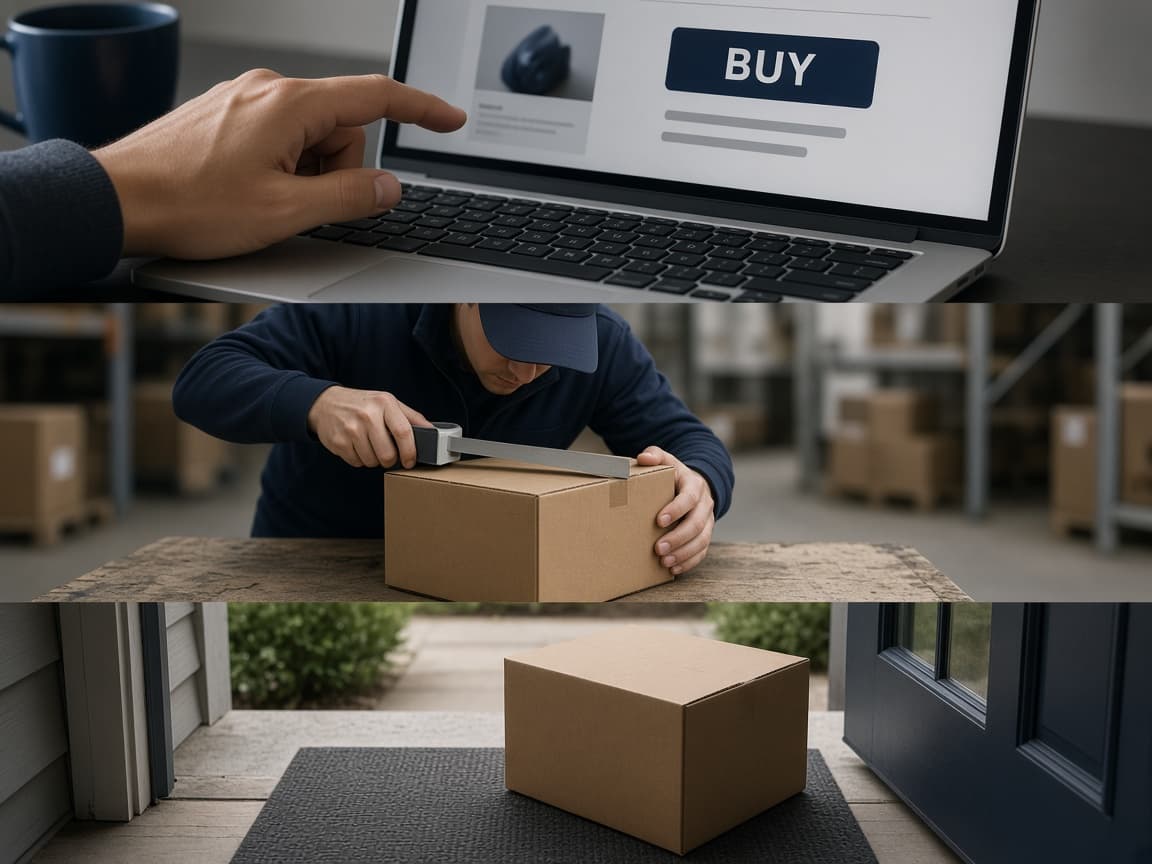
Dropshipping is not the same as fraud
The distinction matters. A dropshipping shop can be honest about delivery time, the manufacturer, the return address and where the company is based. It can also have good customer service and take responsibility if the item is faulty.
The opposite is also true: a shop can misuse the model to hide who is behind it, where the item comes from, or how little it matches the photos. So do not only ask whether the item is dropshipped, but how the shop handles it.
Seven signs the item may be dropshipped
1. Delivery takes an unusually long time
Wording such as “7-20 working days”, “due to high demand” or very wide delivery windows can mean the item is shipped from a distant supplier.
2. The return address is unclear
The webshop may tell you to contact customer service to get the return address, or mention an “international warehouse” without saying which country it is in.
3. The assortment feels random
The same shop may sell kitchen tools, dog toys, posture braces, lamps and beauty products with no clear connection. That can be a sign of a catalogue taken straight from a large supplier platform.
4. Almost everything is on permanent sale
Big discounts and countdowns can be used to make a cheap standard product look like an exclusive offer. Search for the product or the image and see whether the exact same item is sold in many other places at a much lower price.
5. The product photos appear in many other shops
Matching photos do not prove dropshipping; manufacturers often supply images to their retailers. But identical photos, descriptions and specifications across a string of random webshops can reveal the item’s origin and normal price level.
6. The copy promises more than it documents
Be especially critical of big health, quality or environmental claims without concrete specifications, manufacturer details or documentation.
7. The company and the item come from different places
A shop can be registered in the EU while the item is shipped directly from China. That is not necessarily a problem, but it matters for delivery, any import issues and the practical handling of a return.
The main risks for you as a customer
You do not always know what you will get
Product photos and descriptions can make the item look more exclusive than it is. Material, size, colour and function can differ from what you expected.
The return can become unreasonably expensive
For online purchases in the EU you generally have a 14-day right of withdrawal, but you may have to pay return postage if that was disclosed correctly. If the parcel has to travel far out of the country, the cost can approach the price of the item.
It can be hard to place responsibility
Your contract is with the webshop, not with the unknown supplier that sends the parcel. If the shop still tries to send you on to the manufacturer, or does not reply at all, it becomes difficult to use your rights in practice.
Product safety can be unclear
Be extra careful with electrical products, toys, cosmetics and other goods where safety and correct labelling matter. The fact that an item can be ordered online is not in itself proof that it meets European requirements.
How to assess the purchase before you pay
- Find the company and its actual home country.
- Read the delivery time and return terms all the way through.
- Find the return address — not only the contact address.
- Search the product name and images to compare price and descriptions.
- Read independent reviews with a focus on delivery, quality and returns.
- Pay by card so you are in a stronger position if the item never arrives or is completely different from what you ordered.
- Consider whether the saving outweighs the wait, return costs and uncertainty.
It comes down to transparency
Dropshipping does not have to be a reason to cancel a purchase. But you should know what you are agreeing to. A trustworthy shop does not hide its identity, delivery time or return process.
Shopeye looks for several of the signals that can point to dropshipping and shows them together with company details, reviews and return terms. Then you can judge the specific purchase — not just a label.
Sources
Check the webshop with Shopeye before you buy
How it worksWhat we checkMarkdown
Related posts
How to check a webshop's CVR number
A CVR number that exists only shows that there is a company with that number. It does not show that it is the company you are about to buy from.
Scammed by a webshop? How to try to get your money back
Keep the evidence, write to the webshop and contact your bank quickly. Your options depend on the problem and how you paid.
Fake reviews: 7 signs you should not ignore
Five stars feel reassuring, but the average does not tell the whole story. Look for patterns, timing and concrete experiences.